What Does “Large Missile Impact Rated” Actually Mean?
What Does “Large Missile Impact Rated” Actually Mean?
When Florida homeowners research impact windows, doors, and hurricane protection, they often encounter the term “Large Missile Impact Rated.” It sounds technical, but the basic idea is straightforward: the product has been tested to resist impacts from relatively large wind-borne debris under a defined testing standard.
This designation matters because hurricanes can turn outdoor objects and building materials into airborne debris. A window or door that is designed and tested for impact resistance can help protect the opening when debris strikes it during a severe storm.
What Is Large Missile Impact?
Large Missile Impact refers to a category of impact testing used for building products exposed to hurricane conditions.
During the testing process, a product assembly is subjected to impacts from specified projectiles at defined speeds and locations. The purpose is to evaluate how the assembly performs when struck by debris.
The important word is tested.
A product should not be considered Large Missile Impact Rated simply because it is marketed as a “hurricane window” or “storm-resistant window.” The exact product assembly needs to have appropriate testing and approval documentation.
Why Is Impact Testing Important in Florida?
Florida homes can experience strong winds during hurricanes and tropical storms. Those winds can move objects such as:
- Tree branches
- Building materials
- Outdoor furniture
- Signs
- Construction debris
- Other loose objects
When debris strikes an ordinary window, the glass may break and leave an opening in the building envelope.
Impact-rated windows and doors are designed as systems to resist specified impacts and maintain their tested performance under the applicable conditions.
This is one reason impact protection is an important consideration for Florida homeowners.
What Does “Large Missile” Mean?
The word missile in this context does not refer to a weapon.
In building-product testing, a “missile” is a test projectile used to simulate wind-borne debris.
A large missile represents a larger and heavier type of test projectile than those used for small-missile testing.
The testing is designed to represent the type of debris that could potentially strike a building during a severe wind event.
Large Missile vs. Small Missile Impact
Impact testing can involve different categories of projectiles.
The exact testing requirements depend on the applicable standard and product type, but the general distinction is that large-missile testing uses larger projectiles, while small-missile testing uses smaller ones.
This distinction is important because homeowners may see both terms in product specifications.
Rather than assuming that any impact rating means the same thing, ask for the specific testing standard and approval documentation for the product you are considering.
Does Large Missile Impact Rating Mean the Window Cannot Break?
Not necessarily.
An impact-rated window is not necessarily designed so that the glass will remain completely free of cracks after every possible impact.
The testing evaluates how the complete assembly performs under specified test conditions.
Impact-resistant laminated glass can crack when struck while remaining bonded together instead of breaking apart in the same way as conventional single-layer glass.
The frame, glass, interlayer, hardware, and installation system all contribute to the performance of the opening.
Impact Glass Is More Than Just Thick Glass
One common misunderstanding is that impact protection simply means using thicker glass.
Impact-resistant glazing commonly uses laminated glass construction, where layers of glass are bonded together with an interlayer.
When the glass is impacted, the interlayer helps hold the broken glass together.
That does not mean every laminated window is automatically an impact-rated window.
The complete product assembly must be tested and approved for the intended application.
The Complete Window System Matters
When evaluating an impact window, homeowners should look beyond the glass.
The performance of the opening can depend on:
- Glass configuration
- Interlayer
- Frame material
- Frame design
- Hardware
- Fasteners
- Anchorage
- Window dimensions
- Installation method
- Surrounding wall conditions
A product can have impact-resistant glass while the complete assembly has different limitations.
This is why approval documentation is important when comparing impact window products.
What Happens After an Impact?
One of the goals of impact-rated glazing is to help prevent a broken window from becoming an open hole after an impact.
If conventional glass breaks, wind and rain can enter through the opening. Depending on the building and storm conditions, that can contribute to additional damage.
An impact-resistant assembly is designed to maintain its tested performance after specified impacts.
The exact performance depends on the product and testing requirements, so homeowners should review the documentation rather than assuming all impact products behave identically.
Does Large Missile Impact Protection Stop Hurricane Winds?
No.
Impact protection and wind-pressure performance are related but different considerations.
A product may be tested for resistance to debris impact as well as pressure associated with high-wind conditions. The approval documentation identifies the conditions under which the product has been evaluated.
When choosing impact windows, you should therefore consider both:
- Impact resistance
- Structural/wind-pressure performance
The product needs to be appropriate for the actual opening and the requirements of the property.
What About Impact Sliding Glass Doors?
Sliding glass doors can be particularly important because they often cover large openings leading to patios, lanais, or outdoor living areas.
A large sliding glass door has more glass area than many standard windows, so homeowners should pay close attention to the specific product specifications.
Important factors include:
- Overall door dimensions
- Number of panels
- Glass configuration
- Frame system
- Tested performance
- Approval documentation
- Installation requirements
If you’re replacing a large patio opening, don’t assume that a standard impact window specification automatically applies to the sliding door.

Does Large Missile Impact Rating Apply to Hurricane Shutters?
The terminology and testing requirements can vary depending on the type of storm-protection product.
Hurricane shutters, storm panels, screens, and other protective systems can have their own testing and approval documentation.
If you’re comparing shutters with impact windows, ask for the documentation associated with the exact system rather than assuming that all hurricane products carry the same impact classification.
How Can You Verify an Impact Rating?
If a contractor tells you that a product is Large Missile Impact Rated, ask for the documentation supporting that statement.
Look for:
- Manufacturer and product identification
- Applicable testing standard
- Approval number or certification information
- Approved sizes
- Glass and frame configuration
- Performance information
- Installation requirements
- Any limitations or conditions
This information can help you determine whether the product being proposed matches the product that was actually tested.
Florida Product Approval and Miami-Dade NOA
Florida homeowners may encounter both Florida Product Approval and Miami-Dade Notice of Acceptance (NOA) documentation when researching impact products.
These documents can contain important technical information about the approved product, including configuration and installation requirements.
The key point is that an approval applies to a particular product and its approved conditions.
A manufacturer may offer several products, sizes, glass configurations, or frame options. The approval for one configuration should not automatically be assumed to cover another.
Does Large Missile Impact Rating Mean the Product Is the Best Choice?
No single rating can determine whether a particular window or door is the right choice for every home.
Homeowners should consider the complete system, including:
- Impact performance
- Wind-pressure requirements
- Window or door size
- Frame construction
- Energy performance
- Operation
- Appearance
- Maintenance
- Installation requirements
- Applicable product approvals
For a coastal Florida home, the environment and exposure of each opening can also influence the decision.
Large Openings Need Special Attention
Large openings such as patio doors, expansive windows, and lanai enclosures deserve careful evaluation.
The larger the opening, the more important it becomes to verify that the specific product configuration is approved for the required dimensions.
A homeowner should not rely solely on a general statement that a product is “impact rated.”
Ask whether the exact size and configuration proposed for your home are covered by the applicable documentation.
Large Missile Impact Protection vs. Hurricane Shutters
Impact windows provide a permanent form of opening protection because the protection is incorporated into the window itself.
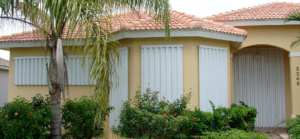
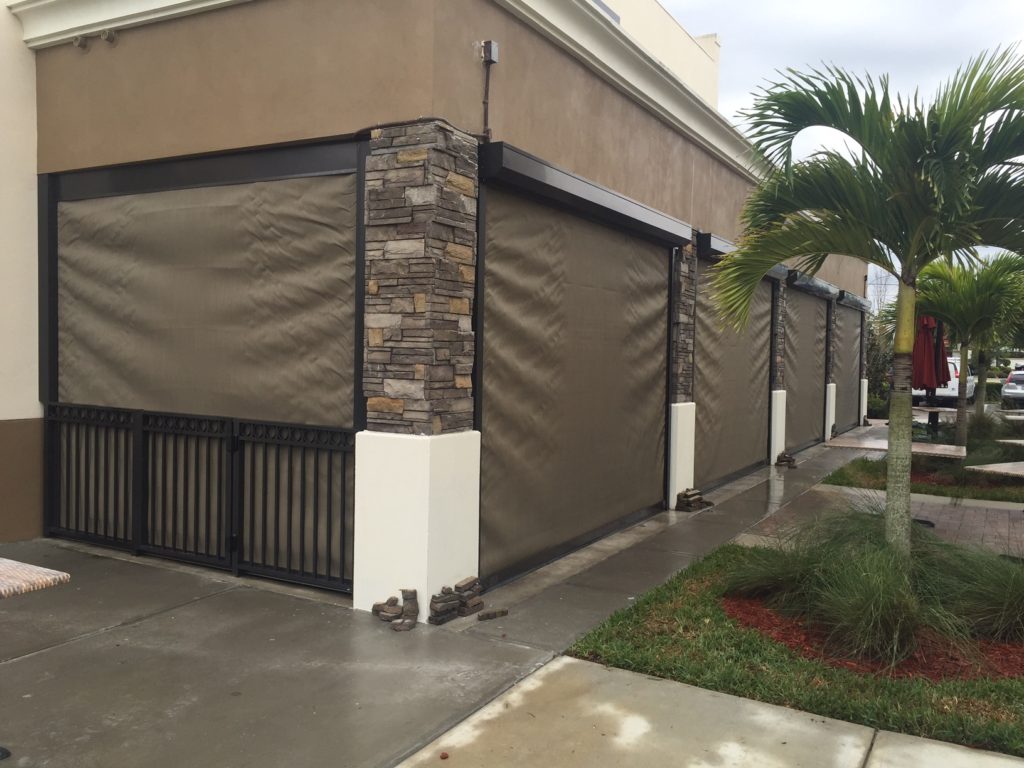
Hurricane shutters provide another approach and may be available in different configurations, including accordion and roll-down systems.
Neither approach should be evaluated only by the name of the product.
Consider:
- How often the system needs to be prepared
- Whether protection is permanent
- The size of the openings
- Appearance
- Operation
- Maintenance
- Installation requirements
- Product approvals
Some homes may also use a combination of impact windows, impact doors, and shutters depending on the openings.
What Florida Homeowners Should Ask Before Buying
Before purchasing impact windows or doors, ask the contractor:
- Is this product Large Missile Impact Rated?
- What testing standard applies?
- What is the exact product model?
- What approval documentation applies?
- Are my window sizes covered?
- What glass configuration is being installed?
- What wind-pressure performance applies?
- What installation method is required?
- Does the documentation cover the complete assembly?
- Are there any size or installation limitations?
Getting clear answers can make it easier to compare different products.
Frequently Asked Questions
Is Large Missile Impact the same as impact-rated?
Large Missile Impact is a specific impact-testing classification. The exact meaning and requirements depend on the applicable testing standard and product approval.
Can impact glass still crack during a hurricane?
Yes. Impact-resistant laminated glass can crack after a severe impact. The purpose of the tested assembly is to provide the specified level of impact resistance and maintain its tested performance under the applicable conditions.
Does laminated glass automatically qualify as Large Missile Impact Rated?
No. Laminated glass by itself does not establish that the complete window or door assembly has been tested and approved for Large Missile Impact conditions.
Are impact windows better than hurricane shutters?
They are different approaches to opening protection. Impact windows provide protection as part of the window assembly, while shutters provide a separate protective system. The appropriate choice depends on the property’s openings, requirements, preferences, and budget.
Do sliding glass doors need special impact ratings?
Large sliding glass doors should be evaluated using the specifications and approval documentation for the specific door system. Their size and configuration can affect the applicable performance requirements.
Choose Impact Protection Based on the Complete System
“Large Missile Impact Rated” is more than a marketing phrase. It refers to documented impact testing for a specific building-product assembly under defined conditions.
For homeowners in Bradenton, Sarasota, and surrounding areas, understanding the difference between marketing claims and actual product documentation can make the window-buying process much easier.
If you’re considering impact windows, impact sliding doors, or hurricane shutters, Armored Dade Windows & Shutters, Inc. can help you evaluate the available options for your home.
Before making a decision, ask for the exact product information, approval documentation, size limitations, and installation requirements. That way, you’re comparing the actual systems being proposed rather than simply comparing labels